The core
Here's the first thing you can do with that shape.
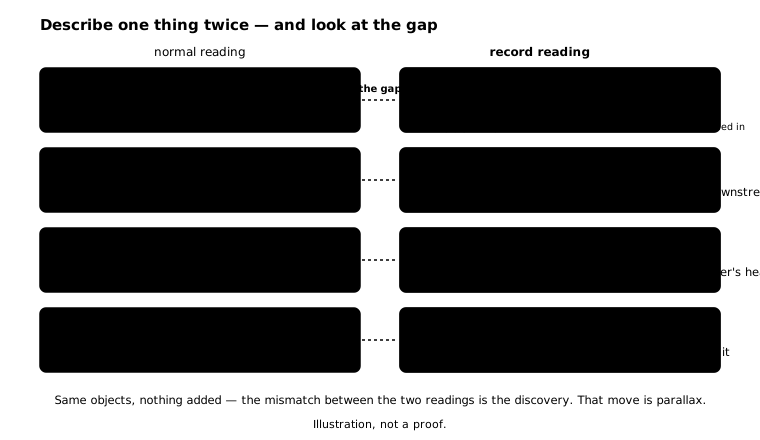
Take any one thing and describe it twice. Once the normal way. Then again as a record — as the one surviving form that a long funnel of pressure produced, still carrying what made it, still shaping whatever it touches downstream. Set the two descriptions side by side, the way you'd lay two almost-identical pictures next to each other and cross your eyes until the differences jump out. The gap between the two readings is the interesting part. That's the move. I call it parallax.
Start with a rock, and go slow, because the whole move is here. The normal reading: a mineral, a thing for geology class, sitting on a shelf. Now the record reading. Everything that made that rock — the heat, the crushing weight of the minerals around it, millions of years of being held under all of it — is the funnel: the long press of forces that narrowed in on it. The rock itself is what came out the far side and lasted: the record. Not the funnel — the thing the funnel produced. And it's still carrying the whole story in its grain and its weight, readable to anyone who knows how to look. Now hold the two readings together and watch the gap open. The normal eye sees a finished object, inert, done. The record eye sees a process that never really stopped — a survivor still pressed full of everything that formed it, still shaping what it touches. That gap, between "an object" and "a record of everything that pressed it into being," is the thing you're learning to see.
Once you've seen it on the rock, the others go fast.
DNA. Normally: a chemical, a long molecule. As a record: a durable copy of what worked, carried forward, rebuilding a whole body downstream from a few feet of code.
A document, a photo, an old letter. Normally: paper, an image, ink. As a record: something built to survive the trip — to cross years and copies and bad handwriting and still reassemble the thing it was about in a stranger's head.
A thermostat. Normally: a little box that holds a number. As a record: it's holding the target — a stored version of the way things are supposed to be — and quietly pushing the room back toward it.
Try it yourself
Pick an object you can see right now. Describe it the normal way — what it is, what it's for. Then describe it as a record: the one surviving form a long funnel of pressure produced, still carrying what made it. Set the two side by side and look at the gap. (Keep the rock straight: the rock is the record, not the funnel — the funnel is everything that pressed it into being.)
Same objects. Nothing added. You just read each one twice and looked at the gap. Do it a few times and you stop seeing objects and start seeing records — which is exactly when a sharper move shows up, hiding inside this one.