Going deeper
So I built the thing that goes looking.
Strip the names off it for a second and it is simple. A system that reads its way across the breadth of human knowledge — field after field, the way you would page through everything in a library — and lays the The move behind the discovery engine: lay the normal reading beside the record reading of the same thing, and the mismatch is the find. It sharpened over cycles into the system that surfaced most of what follows. on each thing it meets. Normal reading beside record reading. Where the gap pops, it keeps the find. That is the engine. It runs that scan wide, and it hands back two kinds of thing: the patterns it noticed out there, and notes on how it could run the scan better next time.
That second kind is the part worth slowing down for.
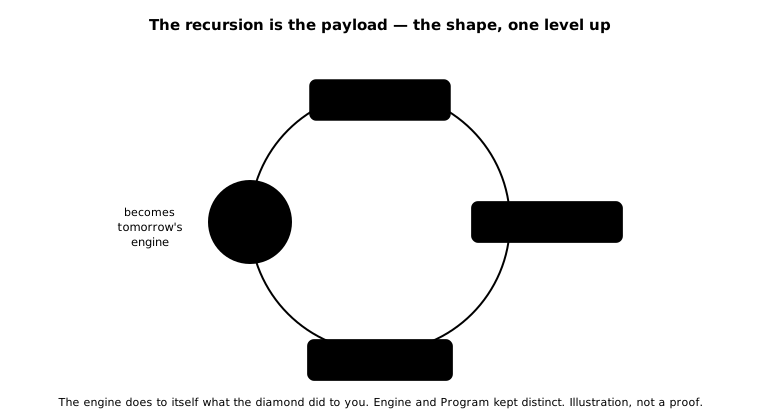
Because the engine is built so that when it takes its own notes and rebuilds itself with them, what comes out the far side can be a sharper engine — one set up to scan a little wider and read the gaps a little cleaner. And then that engine is meant to do the same: scan, find, and write the notes for the next one. The improving is the product, as much as anything it turns up. (There is a name for the loop that runs the engine through those cycles and feeds each upgrade back in. The engine and that loop share a name on purpose — it is the same parallax move from before, now turned on the machine itself.)
Look at the shape of that, and you have seen it already. A wide field of knowledge funnels down through one narrow scan into the few things worth keeping, which fan back out — into a better scanner, which is where the next funnel starts. Funnel, bottleneck, fan-out, one level up, running on itself. The engine does to itself exactly what the diamond did to you.
And while it has been running, it has turned a few things up on its own. Here is what that looks like.