Going deeper
The engine runs wide, not deep. That is the trade. It can sweep across far more of human knowledge than any person has time for, and what it sends back are candidates — places where the same shape it was taught to look for seems to show up, flagged for a closer look later.
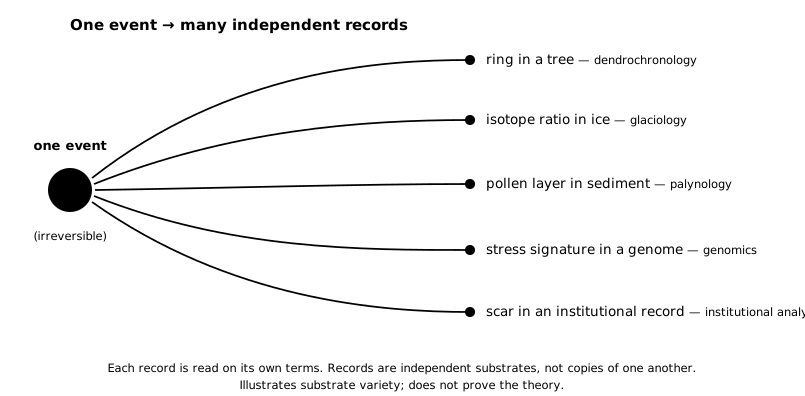
Mostly that means it keeps catching the same few shapes in places nobody would file together. It will set the way a tide pool gathers life into a few crevices beside the way a language gathers meaning into a few worn-down words, and point at the same funnel under both. It will lay the rings of a tree next to the layers of an old landfill and call them the same kind of record. Some of these turn out to be real. Some are loose echoes that come apart the moment you lean on them. The engine does not know which is which yet — that is exactly why it calls them candidates and not findings.
What you are looking at, when it does this, is breadth: one machine reading across everything at once and surfacing more than it can vouch for. A wide net is its own kind of useful. There is a whole catalog of what came up in this net — sorted, weighed, some kept and some thrown back — and that comes later.
But breadth has a ceiling. A wide scan finds more things; it does not find deeper ones. The deepest findings did not come from the machine running loose. They came from the times someone took hold of it and aimed it — pointed it at one hard question and refused to let it wander off. That is the next turn.