The core
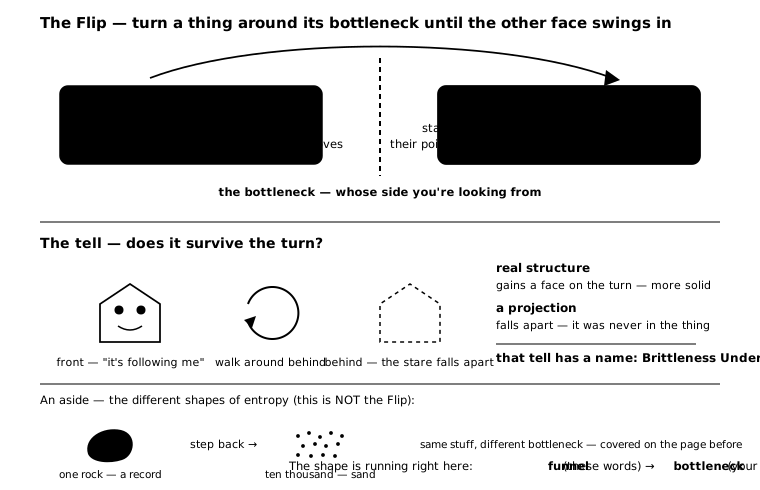
If a bottleneck can be looked through from two sides, then you can do something with it on purpose: take a thing and turn it around its bottleneck until the other face swings into view. That move — and it is a move, something you do, not just a way of seeing — is the Flip. It's the first tool in this whole idea, and the fastest way to learn it is to catch yourself already doing one.
Think of the last argument you were losing. You're dug in, they're dug in, nothing is moving. Then you stop — and actually try to see it from their side. Not give in. Just stand where they're standing for a second and look back at the whole thing from there. And it changes shape. The point you'd been hammering looks smaller. Something they'd been saying the entire time suddenly has weight you couldn't feel before. Same argument, same facts, nothing added — you just rotated it around the one bottleneck that mattered, whose side you were looking from, and the other face came into view. That's a flip. You've run it a thousand times without a name for it.
Now do one on purpose with something that isn't a person. A traffic jam. From inside your car it's an obstacle, a thing happening to you. Flip it: you aren't stuck in traffic, you are traffic — one of the thousand little blockages every other driver is cursing. Nothing about the jam changed; your place in it did, and now you can see the whole shape of the thing instead of just the bumper in front of you. Same event, turned around its bottleneck.
Here's how you tell a real flip from a trick of the light — and it's the most useful part. Think of one of those cardboard dragons whose painted face seems to follow you around the room. It's uncanny, genuinely. Until you walk around behind it, and the "following" just falls apart — because it was never in the dragon. It was structure in your viewing angle, not in the thing. Real structure does the opposite. Turn it and it gains a face; it gets more solid from the other side, not less. A projection dissolves on the turn; a real thing deepens. That tell, whether it survives the turn or comes apart, is worth keeping for the rest of your life. It's the line between something that's actually there and something you were quietly painting onto the world. Once you've felt the difference, it has a name: Brittleness Under Flip.
And notice what's been going on while you read this. The whole idea has been funneling at you through one narrow channel — these words, the few minutes of attention you're handing them — and fanning back out as whatever you carry off. Funnel, bottleneck, fan-out, one more time, with you standing in all three at once. The shape isn't just being described to you. It's running, right here, on you.
Try it yourself
Pick a disagreement you're actually in right now. Rotate it: stand where the other person stands and look back at the whole thing from there. Watch which face swings into view — and whether your own point holds its weight or loses some.
Now you can carry it. There are six small tools that come out of all this — and you already have two of them.